How Tabletop RPGs Build Reading Comprehension
Wondering if D&D is actually good for kids? A text-based RPG turns reading into play, and quietly exercises comprehension, vocabulary, inference, and writing along the way.
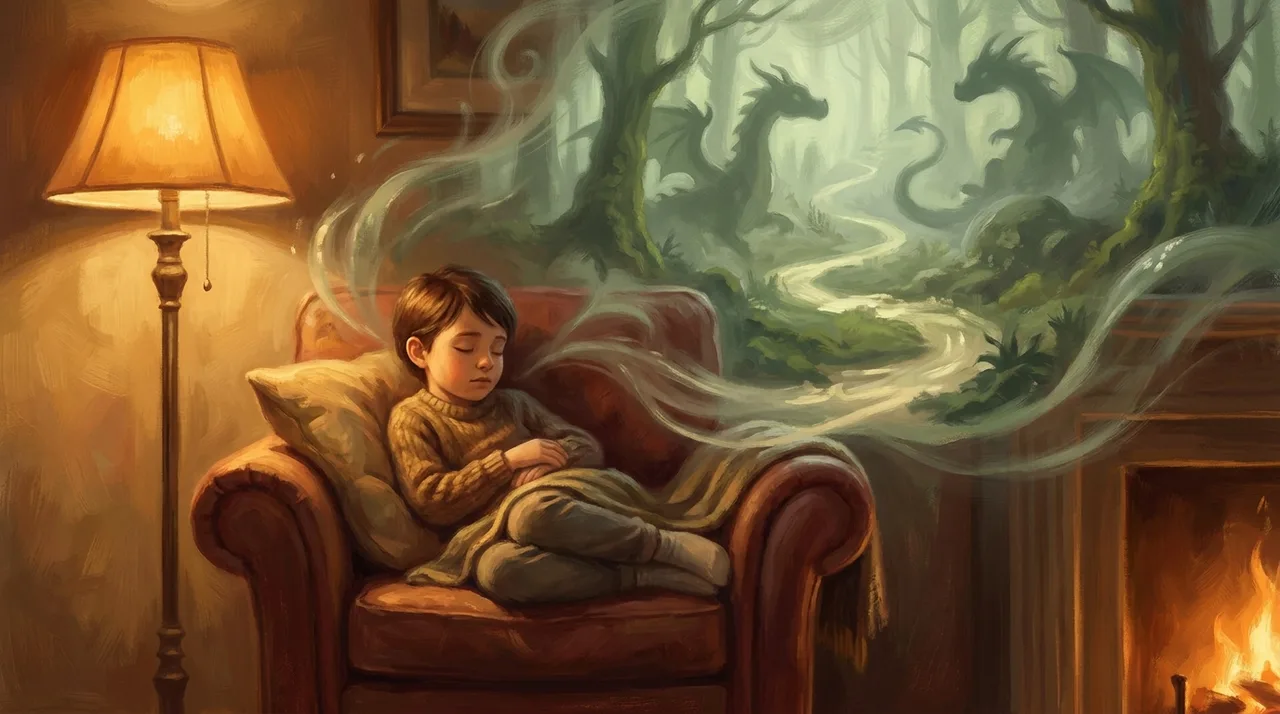
Parents and teachers ask a version of the same question all the time: is D&D actually good for kids, or is it just screen time with extra dice? It is a fair thing to wonder. The short answer is that a story-driven tabletop RPG, especially a text-based one, is one of the easiest ways to get a kid reading for real reasons.
Not reading for a grade. Not reading a worksheet. Reading because they want to know what is around the corner, and because the only way to take their turn is to understand what just happened.
This is the long version of why that works. I will walk through the specific reading skills a text-first adventure exercises, ground each one in what the research says, and then show how a session of play turns those skills into something a kid does for fun without noticing.
First, the part nobody enjoys hearing
Reading scores in the United States are not in a good place. The 2024 results from the Nation's Report Card show average reading dropping at both fourth and eighth grade compared with prior years, with the steepest declines among kids who were already struggling.
Roughly forty percent of fourth graders now read below the NAEP Basic level, the largest share since 2002, and about a third of eighth graders miss that same benchmark. As Education Week reported on the data, the gap between strong and weak readers keeps widening.
I am not going to pretend a game fixes a national problem. Nothing on this page is a substitute for a teacher, a tutor, or daily reading. But one thing leaps out of decades of literacy research, and it is the variable most worth borrowing: a kid who WANTS to read reads more, and a kid who reads more gets better. That is the lever a good game can pull.
Comprehension as a load-bearing loop
Here is the mechanism that makes a text-based RPG different from most reading a kid does. In a worksheet, comprehension is checked AFTER the fact, by an adult, with a red pen. In an adventure, comprehension is the thing standing between the player and their next move.
A Game Master narrates a scene: a locked door, a nervous merchant, a bridge that creaks under the first footstep. To take a sensible turn, the player has to actually understand what was described. Misread the scene and your action lands wrong, the bridge holds a surprise, the merchant clams up.
That is a comprehension check on every single turn, with instant, low-stakes feedback baked into the story. The kid is not being tested on the reading. The reading is the game. When understanding is the price of admission to the fun, motivation does the heavy lifting that a quiz never could.
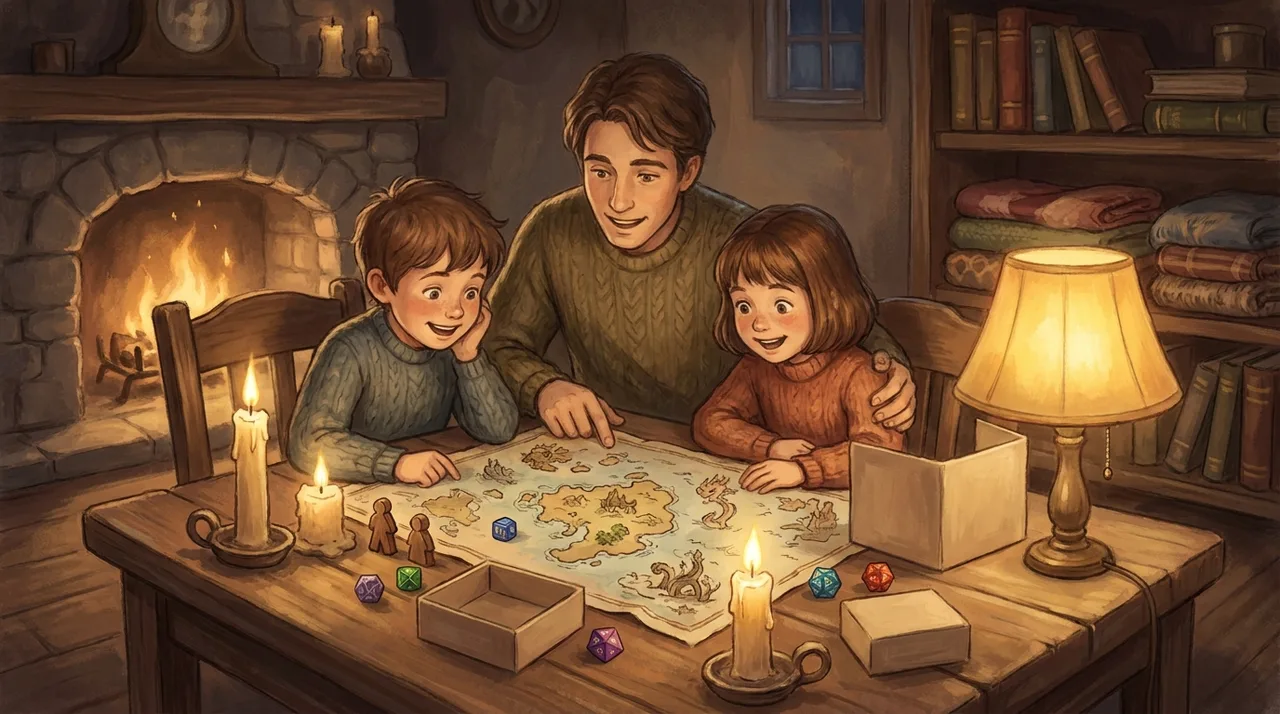
Vocabulary, learned the way it actually sticks
Most vocabulary is not memorized from a list. It is absorbed from running into the same word in enough rich contexts that its meaning settles into place. Researchers call this incidental, or contextual, word learning, and it is how the bulk of a strong reader's vocabulary gets built.
A study summarized in peer-reviewed work on vocabulary learning during reading found that words met across a RANGE of varied contexts produce a deeper, more flexible understanding than a single definition ever does. The more chances a reader gets to meet a word in the wild, the better it lodges.
A fantasy adventure is a vocabulary firehose of exactly the right kind. Words like wary, treacherous, parley, ominous, cunning, and brittle show up because the scene needs them, not because a unit demands them. The kid infers what treacherous means from the slick, mossy stones it describes, then meets the word again three scenes later and it is theirs.
The free-text turn is secret writing practice
In a text-based RPG, you do not pick option A or B. You type what your character does, in your own words. That small act is composition, the most undertrained reading-adjacent skill there is.
To write a turn the kid has to read the scene, decide what matters, and shape a clear sentence that a Game Master can act on. Vague input gets a vague result, so there is a natural pull toward specificity. They learn, fast, that I sneak past the guard while he is distracted by the noise outside earns a better outcome than I do stuff.
Reading and writing are two sides of one coin, and a story they are personally invested in is a far better prompt than any assignment. Nobody has to be told to try harder. The story rewards the clearer sentence on its own.
Inference, prediction, and cause and effect
Comprehension is not just decoding the words on the line. The hard, high-value skills are the ones BETWEEN the lines: inferring what a character is really after, predicting what a choice will trigger, tracking cause and effect across a story that unfolds over an hour.
An adventure trains all of it relentlessly. Why is the innkeeper so eager for you to leave by morning? What happens if you trust the stranger at the crossroads? The player who notices the clue planted three scenes back, and connects it to the locked chest now, is doing exactly the inferential reading that separates a surface reader from a deep one.
Crucially, the consequences are immediate and they make sense. A wrong prediction is not marked incorrect, it is just a plot twist the kid then has to read and respond to. The story becomes a working memory exercise dressed up as a quest, and the kid keeps the whole narrative thread alive in their head because they care how it ends.
Fluency, when turns get read aloud
Reading fluency, the ability to read smoothly, accurately, and with expression, is one of the strongest predictors of comprehension there is. Decades of work in the science of reading put the correlation between oral reading fluency and comprehension remarkably high.
As this overview of the fluency research lays out, fluent readers free up the mental bandwidth that labored readers spend just sounding out words, and that freed bandwidth is what makes meaning possible. The catch is that fluency comes from practice reading aloud, which most kids avoid the second it feels like performance.
A game gets around that flinch entirely. When a kid reads their turn aloud at the table, or reads the narration to the group, they are doing oral reading with an audience that is rooting for them, not grading them. It is the practice without the spotlight anxiety, because the spotlight is on the story.
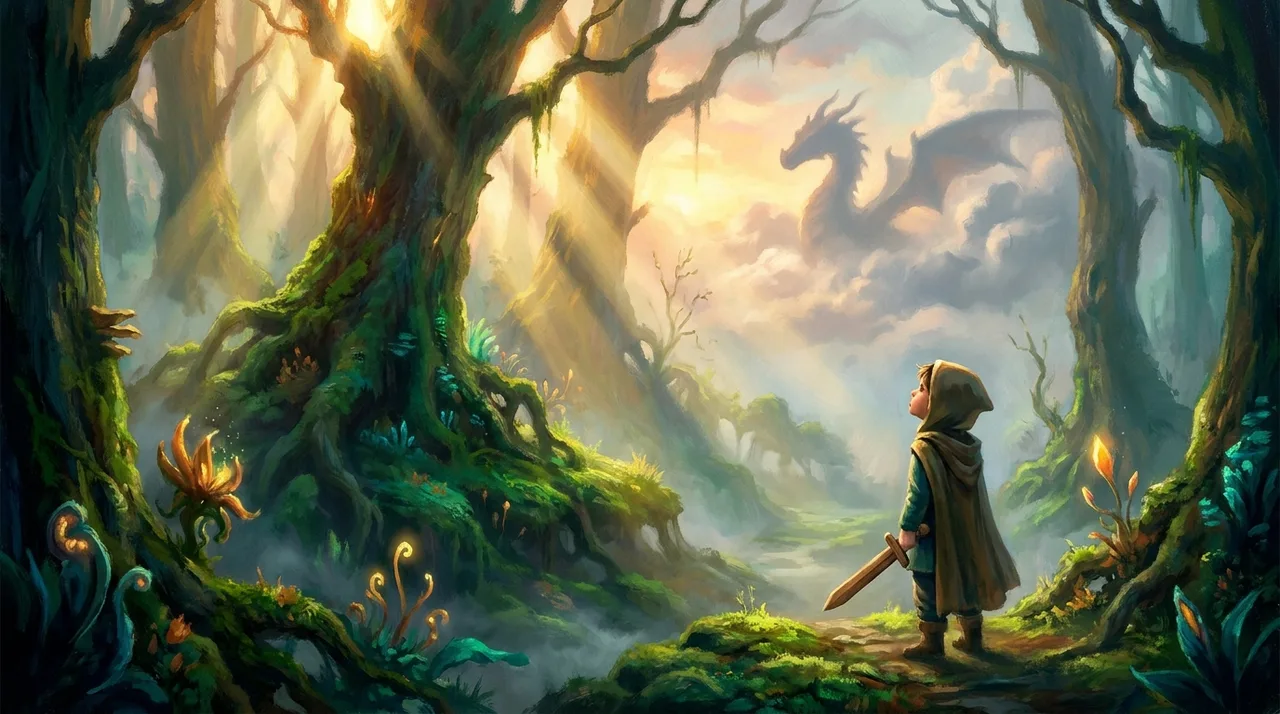
Motivation, the hardest variable, handed over for free
If there is one finding that should reshape how we get kids reading, it is this: motivation and engagement are not soft extras. They are a direct cause of reading achievement.
Research on how motivation and engagement enable reading achievement keeps landing on the same chain: a motivated reader reads more, reading more builds skill, and the amount a kid reads is the path through which motivation turns into actual gains. Engagement is not the cherry on top, it is the mechanism.
This is the one variable every reading program fights hardest to manufacture, and the one a game supplies effortlessly. A kid will read paragraph after paragraph of dense narration to find out whether the dragon is friendly, no sticker chart required. Play takes the hardest part of literacy instruction and makes it the easy part.
New adventures, straight to your inbox
Get the StartRPG newsletter for fresh one-shots, game night ideas, and tips for hosting a table with friends.
We respect your privacy. Unsubscribe at any time.
The pop-culture tailwind is already here
The good news for any parent or teacher is that the interest is sitting right there waiting to be used. After Stranger Things put a group of kids around a dining table rolling dice, a whole new generation decided the hobby was cool.
According to coverage of the show's effect on the game, searches for how to play Dungeons & Dragons spiked enormously after the show aired, and starter-set sales jumped right along with them. The cultural permission to like this stuff has never been higher.
That matters because you do not have to sell a reluctant reader on a fantasy adventure the way you would have a decade ago. The aesthetic is mainstream now. The job is just to lower the barrier between a curious kid and a story they can actually play.
Where a text-first format makes this easy
Traditional D&D is rich, but the on-ramp is steep: a rulebook, character math, dice, and someone willing to run the whole thing. For a kid, and for a busy parent or a teacher with twenty-five of them, that friction is usually where the good intentions die.
A text-first adventure strips that down to the part that builds reading. A tireless Game Master sets every scene in writing and reacts to what the players type, so the experience is reading and writing from the first turn to the last. If you want the gentle, no-homework version of the hobby, my walkthrough of how to play a tabletop RPG with no rulebook covers exactly what a first session looks like.
A couple of design details matter for literacy specifically. Turns are first-person and easy to read aloud, so the oral-reading practice happens naturally. The spotlight rotates, so every player reads and writes rather than letting one confident kid carry the table. And when the story takes a wrong turn, a simple report-error button lets a player flag it and the Game Master repairs the scene, which keeps a stumble from becoming a shame spiral.
An honest word on the limits
I am not going to oversell this. A story-first adventure does not come with a reading-level dial, a grade-band setting, or a locked kid-safe content mode, and there is no teacher dashboard tracking comprehension scores. It is a fantasy role playing game, so the story can include danger, monsters, and combat, and a parent or teacher should preview the kind of adventure a group is starting, pick the Lighthearted romp mood for the lightest tone, and steer it the same way you would skim a book before handing it over.
And I want to be clear about the claim. This kind of play EXERCISES real reading skills, for the reasons above. It is not clinically proven to raise any particular kid's test scores, and no game should promise that. The honest pitch is simpler: it gets kids reading a lot, with their guard down, for a reason they actually buy.
For families who want more on-ramps than one game, the broader cluster of ideas in my roundup of games that get kids reading pairs well with everything here. If reading aloud is the part you want to lean into, readers theater for kids is the classroom cousin of a text RPG, and for the home version, a reading-friendly family game night turns all of this into a standing weekly habit.
The bottom line
A text-based RPG is one of the rare activities that puts comprehension, vocabulary, inference, and composition into the same hour, and asks a kid to do all of it because they WANT to know what happens next. Every turn is a comprehension check the kid never resents, because passing it is just playing the game.
If you want to see the loop in action with your own kids or class, the simplest way is to start an adventure with friends and watch them read without being told to. It is, honestly, the easiest reading-rich thing I know of to set up: an easy rpg with no rulebook, no prep, and no one stuck running the game.
Frequently asked questions
Is D&D good for kids?
For reading, yes, in a meaningful way. A story-driven role-playing game gets kids reading narration, inferring what characters want, and writing their own actions, all because they are invested in the outcome. It does not replace reading instruction, but it supplies the motivation that most reading practice struggles to create.
Does playing D&D actually help reading?
It exercises the skills that underlie reading comprehension: understanding a scene before you act, learning vocabulary from rich context, predicting consequences, and reading turns aloud. The research connecting reading motivation, reading amount, and achievement is strong, and a game is unusually good at sparking that motivation. No single game is proven to raise a specific child's test scores, so treat it as a powerful supplement, not a cure.
What reading skills does a tabletop RPG build?
Comprehension on every turn, vocabulary in context, inference and prediction, cause-and-effect tracking across a long story, composition through free-text actions, and oral reading fluency when turns are read aloud. The unusual part is that all of these run at once inside a single session.
How does a text-based RPG help vocabulary?
Adventures use vivid, specific words because the scenes need them, and players meet the same words again across many scenes. That repeated exposure in varied contexts is exactly how vocabulary research says words are best learned and retained, far better than a single definition on a list.
What age is a reading-focused RPG good for?
Any kid who can read short paragraphs and type a sentence can play, which generally means around upper elementary and up, with younger readers playing alongside an adult. Because there is no reading-level control built in, a parent or teacher should preview the adventure and set the tone for the group.
Turn reading into a game tonight
Pick a quest, make a character in a minute, and let a tireless Game Master run a story your kids will read every word of. No rulebook, no prep, free to play.