Family Game Night That's Secretly Reading Practice
Want an educational family game night the kids actually beg for? These reading-friendly ideas turn one cozy evening into stealth literacy practice, no worksheets.
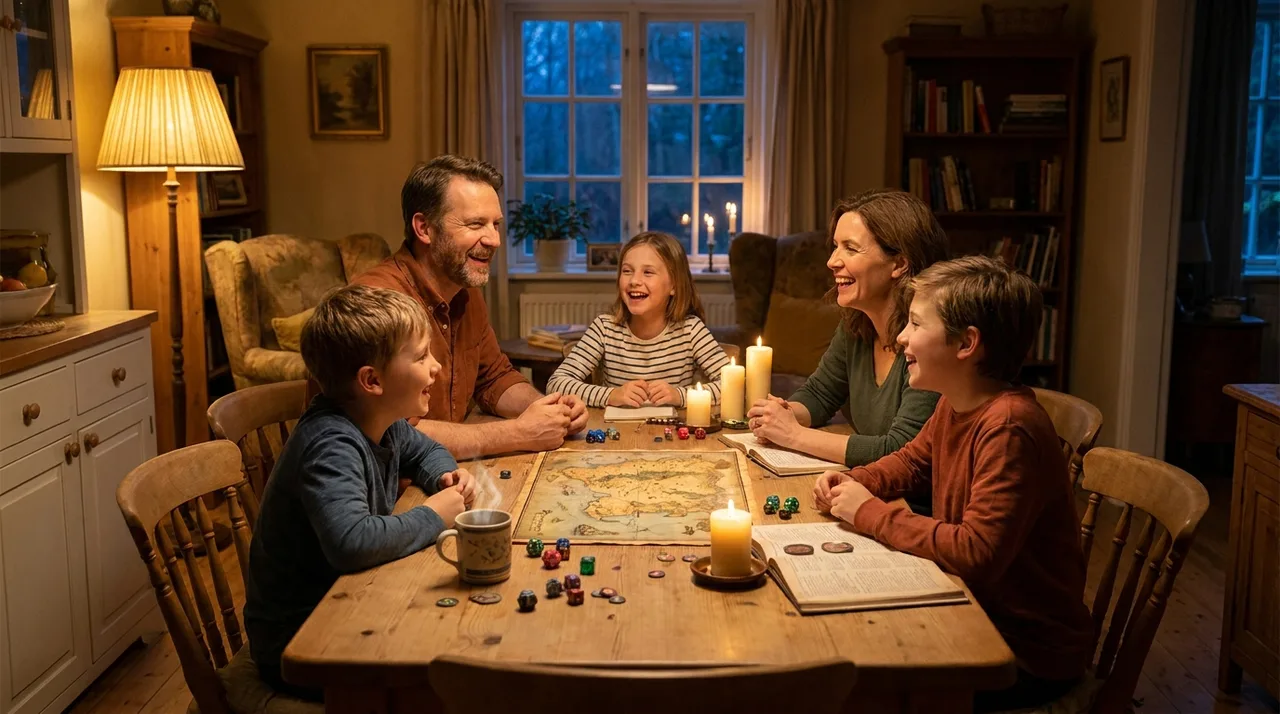
Here is the quiet trick most parents miss. The best educational family game night does not look educational at all, because the second a kid smells homework, they are out. The goal is an evening they ask for again, that happens to be packed with reading.
And the timing has never been better. A whole generation watched a group of kids on a TV show huddle around a basement table rolling dice, and suddenly tabletop adventures are cool in a way they have not been in decades. That cultural pull is your open door.
Why kids suddenly want this
When Stranger Things put a fantasy tabletop game at the heart of its story, it did the thing a great song does when it goes viral and climbs the charts again forty years later: it handed an old pastime to a brand new audience. Google searches for how to play the game jumped roughly 600% after one season aired, and starter-set sales spiked alongside it. You can read the cultural rundown in this look at how the show made the hobby cool again.
That matters for a parent for one simple reason. Motivation is the whole ballgame with reading, and you cannot manufacture it with a chore chart. Your kid already wants the thing this kind of game night delivers, so you are not pushing anymore, you are just opening the door.
Reading research backs this up cleanly. Studies on reading for pleasure keep landing on the same lever: choice and a sense of ownership drive engagement more than any required reading list, which is exactly why a review of the reading-for-pleasure evidence ties motivation to autonomy and genuine interest. A game gives kids an authentic reason to read: to play, not to pass.
Reading-friendly game night ideas
Before the main event, here are a few easy ways to build a game night where reading is the engine, not the punishment. None of these feel like school, and all of them sneak the words in.
- Story-building card games. Games where players draw prompt cards and add the next line of a wild tale. Younger kids narrate out loud, older kids read the prompts and stretch the plot.
- Read-aloud mystery and choose-your-path books. One person reads the scene, the table votes on what happens next, and you flip to the page that follows. Everyone is tracking text to find the outcome.
- Clue-and-riddle hunts. Hide written clues around the house that each point to the next. Reading the riddle correctly is the only way forward, which turns careful reading into the actual game.
- Word and bluffing games. Define-the-word bluffing games and crossword-style team games make vocabulary the fun part instead of a quiz.
- A shared adventure with a storyteller. The centerpiece, where everyone reads their part, decides what their character does in their own words, and builds one story together.
The first four are great warmups. The last one does the most work, because it folds reading, writing, and reasoning into a single hour the kids think is pure fun. That is the one worth building your night around.

The centerpiece: a tabletop adventure everyone reads into
A tabletop role-playing adventure is one of the easiest ways to get a kid exercising logic, reading comprehension, and imagination all at once. The reason is structural, not magical. To play, they have to read the scene, picture it, weigh options, and then say what they want to do.
Watch what each turn quietly demands. A storyteller sets a scene, and your kid has to READ it closely enough to understand the stakes. Then they reason about choices, then they put their plan into their own words out loud. That is comprehension, problem-solving, and expression in one breath.
It scales across ages at one table too. A seven-year-old can shout what their brave knight does while a parent reads the scene aloud, and an eleven-year-old can read their own part and write a sneakier plan. Reading aloud together is one of the most reliable literacy boosters there is, which is why a pediatric group calls shared reading a lifelong benefit beyond literacy.
There is a real division of labor that keeps it fun. The kids supply the imagination and the choices, and a tireless Game Master sets every scene, plays every character, and reacts to whatever wild thing they try. Nobody at the table has to be the rules expert, and no parent has to spend Saturday prepping a dungeon.
How a family starts one in about a minute
The friction that scared families off the old hobby was real: a thick rulebook, character math, and one poor person stuck running the whole thing. Strip all of that away and what is left is genuinely fast. Here is the whole flow.
Start a room and pick a hook
One parent starts a game and chooses a quest that sounds fun: a missing village cat that is clearly not just a cat, a haunted lighthouse, a dragon with a toothache. Keep it to a one-shot, a single story you finish in one sitting, so bedtime stays intact.
Everyone makes a character, no math
Each kid picks a vibe and a name. A reckless knight, a sly fox of a thief, a kind healer with a short fuse. There is nothing to balance and no sheet to fill out, so even the youngest reader is in the game in under a minute.
Read the scene, then say what you do
The storyteller describes where the party stands, and the table reads or hears it, then answers the only question that matters: what do you do. Kids reply in their own words, which is the writing-and-reasoning half hiding inside the fun. The world responds, and the loop keeps going.
If you want to see the shape of a first session before you gather everyone, my plain-English walkthrough of how to play a tabletop RPG with no rulebook covers a quest start to finish.
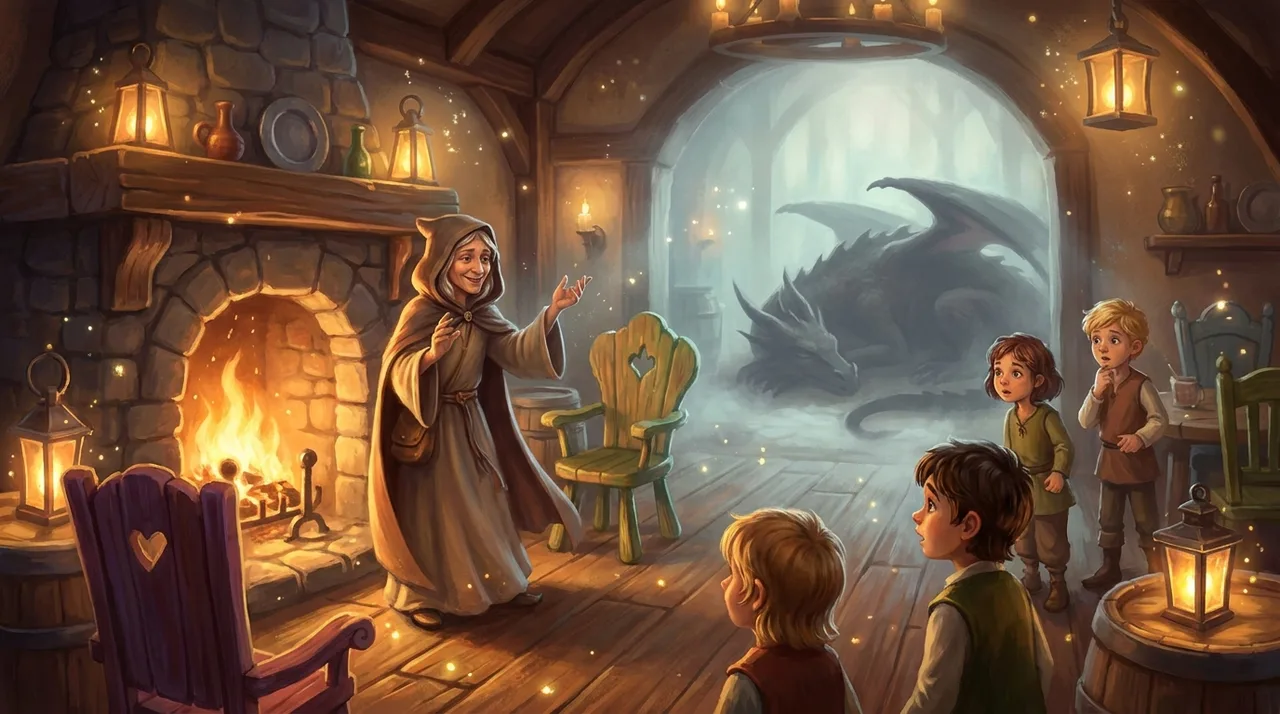
The good kind of screen time
If you flinch at the word screen, you are in good company, but the guidance has shifted in a useful direction. Pediatric advice now leans less on a stopwatch and more on what the time is actually made of, favoring quality, conversation, and doing it together. You can see that emphasis in the updated screen-time recommendations for families.
By that standard, a shared adventure is close to ideal. It is co-played, it sparks conversation, and the kids are reading and inventing rather than passively scrolling. You are in the room steering it, not handing a tablet over and walking away.
Let me be honest about the limits, because trust matters here. This is a fantasy adventure, so the story can include danger, monsters, and combat, and there is no reading-level dial, no locked kid-safe mode, and no kid mode yet. A parent stays the host and the filter: pick the Lighthearted romp mood for the lightest tone, preview a quest first, and steer it the same way you would for a movie night.
New adventures, straight to your inbox
Get the StartRPG newsletter for fresh one-shots, game night ideas, and tips for hosting a table with friends.
We respect your privacy. Unsubscribe at any time.
Making it a habit, not a one-off
The literacy payoff comes from repetition, and repetition only happens when the kids pull you back to the table. Reading aloud to children consistently outperforms simply talking to them for building vocabulary and grammar, which a long line of work, including this study on reading aloud and early literacy, keeps confirming. A weekly adventure is reading aloud with stakes.
A few small things keep it sticky. Let kids choose the quest, because that ownership is the motivation engine. Keep sessions short so they end wanting more, and let the silly plans win sometimes, because a goblin who gets bribed with a warm pie is a story your kids will retell for a week.
Once your family has the rhythm, branch out. My list of tabletop RPG night ideas gives you fresh quests, and if you want the deeper case for the learning side, this breakdown of how tabletop adventures build reading comprehension lays out exactly which skills get a workout.
The bottom line
Stealth literacy is the move. You are not selling your kids on reading, you are inviting them into a story they have to read to play, on a night they already want because the wider world made the hobby cool again. The reading comes along for free.
When you are ready to gather everyone, you can start an adventure with friends in about a minute, with no rulebook and nobody stuck running the game. Grab the kids, send a room code, and start your first quest tonight.
Frequently asked questions
What makes a family game night educational without feeling like school?
The trick is giving kids an authentic reason to read, like reading a clue to advance or a scene to decide their next move, instead of reading to be tested. When the words are the path to playing, kids do the reading willingly and never register it as work.
What age can kids start a tabletop adventure?
Early readers can join if a parent reads the scenes aloud and the child says what their character does. Confident readers around eight and up can read their own parts. Because there is no rulebook or character math, mixed ages share one table comfortably.
Does this really help with reading?
A shared adventure exercises reading comprehension, reasoning, and expression in the same hour, and reading research consistently links real reading gains to motivation and choice. It is not a graded program, but it is genuine reading practice the kids actually want to do.
Is this just more screen time?
It is a shared, co-played activity built on reading and imagination rather than passive scrolling, which is the kind of time current pediatric guidance favors. A parent stays in the room hosting and steering the story the whole time.
Can I control the reading level or content?
There is no reading-level dial or locked kid-safe mode, so the parent stays the host and the filter, the same as a movie night. You choose the quest, set the tone at the table, and guide the story as it unfolds.
Turn tonight into stealth reading practice
Pick a quest, let each kid make a character in a minute, and a tireless Game Master runs the rest. No rulebook, no prep, free to play.