Screen Time That's Actually Reading
Tired of the screen-time guilt? Here is the rare screen activity that is mostly reading, writing, and reasoning out loud, and your kids will actually ask to do it.
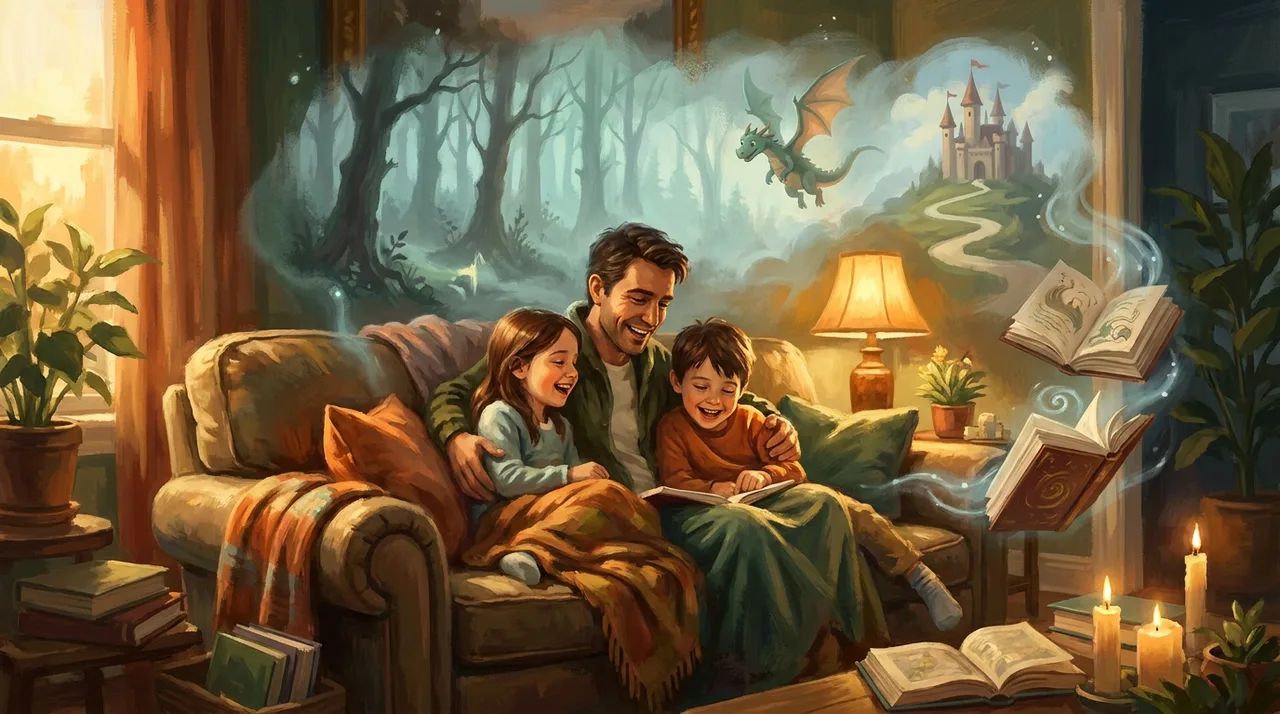
You know the feeling. A kid is hunched over a screen, and a little voice in your head is already keeping score. How long has it been, what are they even watching, and is this the day the screens finally rot their brains.
Here is the reframe that took the edge off that guilt for me. Not all screen time is the same thing. There is a screen activity that is, underneath, almost entirely reading and writing and reasoning, and kids beg to do more of it.
Not all screen time is the same animal
The word screen time lumps two very different things into one scary number. Scrolling a feed and autoplaying the next video is one kind of activity. Reading a story, deciding what your character does next, and typing it out is a completely different one.
Researchers and pediatricians have stopped treating all minutes as equal too. The American Academy of Pediatrics now pushes families toward a quality-and-context approach, with its Family Media Plan and co-viewing guidance instead of a single hard cap on the clock. The question moved from how much to what kind.
The most useful line researchers draw is between PASSIVE media and active media. Passive media washes over a kid while they sit still. Active media asks them to make choices, create something, and think on their feet.
Passive versus active, in plain terms
Passive screen time is the lean-back stuff: an endless feed, autoplay video, a show running in the background. The child is a spectator, and the next thing arrives whether or not they did anything.
Active screen time is lean-forward. The kid is steering. They read something, decide what it means, respond, and the world reacts to that response. The AAP specifically encourages the participatory kind of media, the sort where a child is doing rather than just absorbing.
A text-first storytelling adventure sits squarely in that second bucket. To play at all, a kid has to READ what is happening, picture it, weigh a choice, and put their decision into words. Sitting still and absorbing is not an option, because nothing moves until they read and respond.
But is reading on a screen actually good for them?
Let me be honest about the research, because the screen-time conversation is full of people who are not. For younger kids, plain reading comprehension does tend to be a bit better on paper than on a screen. A 2024 systematic review in the Journal of Research in Reading found that print still has an edge for many young readers.
Education researchers even have a name for it, the screen inferiority effect, where students remember a little less from a screen than from the same text on paper. Education Week has covered why reading on screens can shallow out comprehension for younger students, and it is worth knowing before you hand over a device.
But dig into WHY that gap exists and it points straight at the fix. The problem is usually shallow, distracted, skim-and-scroll reading, not the screen itself. When the text demands a decision before anything continues, the skimming stops, because skimming gets you nowhere in a story you are steering.
That is the whole difference. A feed rewards skimming. A story you have to act inside punishes it, and quietly trains the slow, careful reading that the comprehension studies are actually measuring.
Three skills, stacked into one game
What sold me was realizing how much is happening at once when a kid plays a text adventure. It is not one skill dressed up as fun. It is three of them braided together.
- Reading comprehension. Every turn opens with a scene to read and understand. Miss a detail and the next choice makes no sense, so kids reread on purpose, which is exactly the close reading worksheets try to force.
- Writing and expression. They answer in their own words. Not a multiple-choice bubble, but an actual sentence describing what their character tries, which is real composition practice disguised as play.
- Logic and reasoning. A locked door, a suspicious merchant, a riddle from a goblin. Kids weigh options, predict consequences, and problem-solve, all while staying in the story.
A worksheet isolates one of those at a time and drains the life out of it. A story needs all three at once and gives a kid an authentic reason to use them, which is to find out what happens next. That motivation is the part no workbook can fake.
This is not a new idea, just an old one with a fresh delivery. Teachers have used tabletop role-playing in classrooms for years to pull reluctant readers in, and Edutopia has documented how role-playing games support reading, collaboration, and student engagement. The format works because the reading has a point.
The Stranger Things effect is real
If your kid is suddenly curious about dragons and dungeons, you can probably thank a TV show. Stranger Things put a Dungeons and Dragons table at the center of its story and dragged the whole hobby back into the mainstream for a new generation.
It was not a small bump either. After the show, searches for how to play the game reportedly jumped, and starter set sales spiked dramatically as kids and teens went looking for a way in. The cultural door is already open.
That is a gift for a parent who wants better screen time. The interest is there, fueled by something they actually think is cool, and the underlying activity happens to be a reading-and-writing game. You are not selling broccoli here.
New adventures, straight to your inbox
Get the StartRPG newsletter for fresh one-shots, game night ideas, and tips for hosting a table with friends.
We respect your privacy. Unsubscribe at any time.
Make it social, not solitary
The single best upgrade you can make to any screen time is to stop making it a solo activity. The same AAP guidance that worries about passive use is warm on co-viewing, where you sit alongside your kid instead of handing off a device and walking away.
A text adventure is built for exactly that. One person starts a room, and the rest of the family or a few friends join with a code from their own phone or laptop. The reading and the choices become a group activity, with everyone arguing over the plan and laughing at the goblin who offers them a suspiciously warm pie.
When you play along, you also get to STEER. You see every scene your kid sees, so you can preview where a story is heading and nudge it somewhere lighter if you want to. Treat it like reading a book together, where you are right there turning the pages with them.
Keep it bounded: one quest, one sitting
The other thing that makes feeds and autoplay feel gross is that they never end. There is no natural stopping point, so the screen time just keeps bleeding on. A good adventure has the opposite shape.
A one-shot is a single, self-contained story you can start and finish in one sitting. It has a beginning, a middle, and a real ending, which gives the whole thing a clean edge. Play the quest, reach the finale, and you are done on purpose instead of being yanked away mid-scroll.
That built-in finish line makes it easy to time-box. Pick a short quest before dinner, play it through together, and close the laptop when the story closes. It is screen time with a curtain call, which beats the endless feed every time.
An honest word on the limits
I am not going to pretend this is a guaranteed literacy program or a substitute for a teacher. It is a fantasy adventure, so the story can include danger, monsters, and combat, and it has no reading-level dial, no locked kid-safe content filter, and no kid mode yet. Pick the Lighthearted romp mood for the lightest tone, preview a quest before you hand the device over, and treat those limits as real.
What it is, instead, is a genuinely good way to spend a screen hour. So play the first session WITH your kid, get a feel for the tone, and steer the story toward the kind of adventure you are comfortable with. You stay the editor of what shows up on the screen.
Used that way, it turns a guilt-laced hour into reading, writing, and reasoning that your kid chose. That is a rare trade, and it is the entire reason I keep coming back to it.
How to actually start one tonight
You do not need to learn rules or buy anything to try this. The whole point of an easy rpg is that there is no rulebook, no prep, and nobody stuck running the game, so a parent can jump in cold alongside the kids.
If you want the longer beginner walkthrough first, my guide to how to play a tabletop RPG with no rulebook covers what a session feels like start to finish. And if you want the research-backed case for the reading side specifically, my deeper look at how a tabletop RPG builds reading comprehension goes further than I can here.
For a low-stakes first night with the family, my notes on a reading-friendly family game night give you a ready-made plan. When you are set, you can start an adventure with friends and have a one-shot finished before bedtime.
Frequently asked questions
Is a text-based adventure really better than other screen time?
It is a different category. Most screen time is passive, where a kid absorbs content that arrives on its own, while a text adventure is active, because nothing happens until the child reads, decides, and writes a response. Pediatric guidance favors that participatory kind of media over passive viewing.
Does reading on a screen hurt my kid's comprehension?
The research shows print has an edge for young readers, mostly because screens invite shallow, distracted skimming. A story you have to act inside removes that shortcut, since a kid cannot skim past a scene and still know what to do next. The reading stays close and deliberate.
What ages is this good for?
It works best once a child can read comfortably on their own, roughly early elementary and up, and it scales nicely for teens and adults. Younger kids can still play if a parent reads the scenes aloud and helps put choices into words, which turns it into a shared reading activity.
Can we play together as a family?
Yes, and that is the best way to do it. One person starts a room and everyone else joins with a code from their own device, so the reading and the choices become a group activity. Playing along also lets you preview and steer the story.
How long does one session take?
A one-shot is designed to start and finish in a single sitting, which makes it easy to time-box. Pick a short quest, play it through, and stop at the natural ending instead of getting pulled along by an endless feed.
Trade an hour of scrolling for an hour of reading
Start a quest, read a scene, decide what happens next, all together. No rulebook, no prep, free to play, and finished before bedtime.