I Want to Be a Hotdog: The Jackbox of RPGs
A funny tabletop RPG session where I ditched the quest to become a hotdog, and the Game Master rolled with it. Here is why goofing off is the most fun way to play.
I walked into a haunted keep to meet a tragic ghost wolf and uncover the lost heir to a cursed throne. Then I turned myself into a hotdog. This is the funniest tabletop RPG session I have played in a long time, and I played the whole thing completely ALONE.
The story is true, the wolf was genuinely sad about it, and I have the receipts below. More than that, it is the clearest example I have of why a funny tabletop RPG beats a serious one more often than people expect. The comedy is not a bug in the game, it is the best feature.
The night I became a hotdog
The quest opened the way good ones do. I was standing on an overgrown path at the foot of Greyholm Keep, moonlight caught in the dew, a mournful howl echoing from somewhere in the ruins above. A trampled wreath of wildflowers lay at my boots, left by villagers, and a paw print too large for any normal wolf marked the mossy stair.
I called the wolf out into the courtyard. Two pale blue eyes flickered awake in the dark, and a massive spectral wolf stepped into the moonlight, its body shimmering like it was barely holding its shape. Frost crept across the stones where it walked.
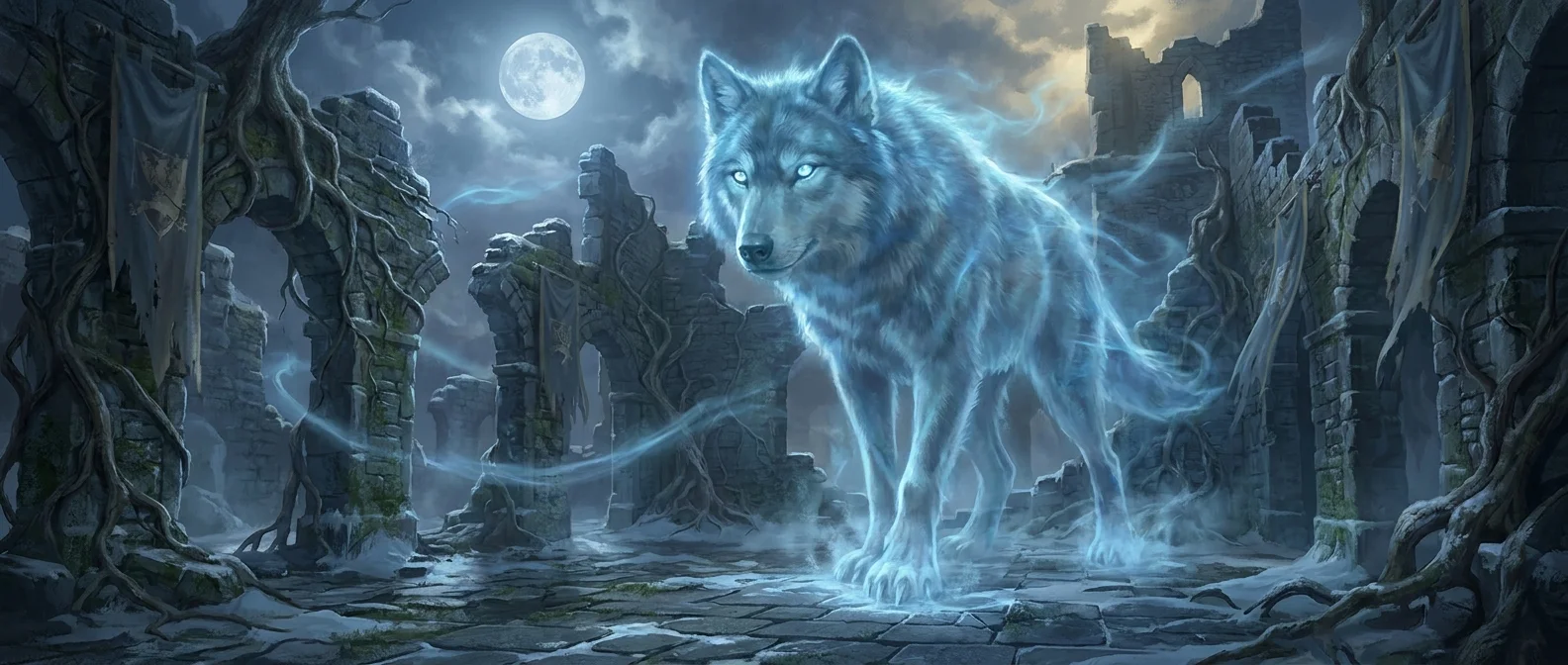
I raised my greataxe and challenged it. The wolf did not take the bait. It circled, too fast to be a real animal, and spoke in a voice like wind through old trees: "Steel and fury will not open Greyholm's secrets. Will you listen, or will you perish?"
This is the part where a serious player leans in and asks about the secrets. I am not always a serious player. There is a small "report error" button in the game, meant for when the story needs a fix, and I used it to make one humble request: turn me into a hotdog.
The Game Master obliged. A peculiar sensation rippled through me, flesh and bone reshaping until I was, in its exact words, "unmistakably, and somewhat alarmingly, a hotdog." The wolf's eyes narrowed in confusion, and the frost actually retreated a little, as if even an ancient curse was not sure what to do with this.
So I committed, shuffling toward the wolf, waving my little hotdog arms, and tempting it to eat me. It halted, sniffed the air, and let out a sigh that sounded almost amused. "Is this your true shape?" it asked, and for the first time the frost at my feet began to melt.
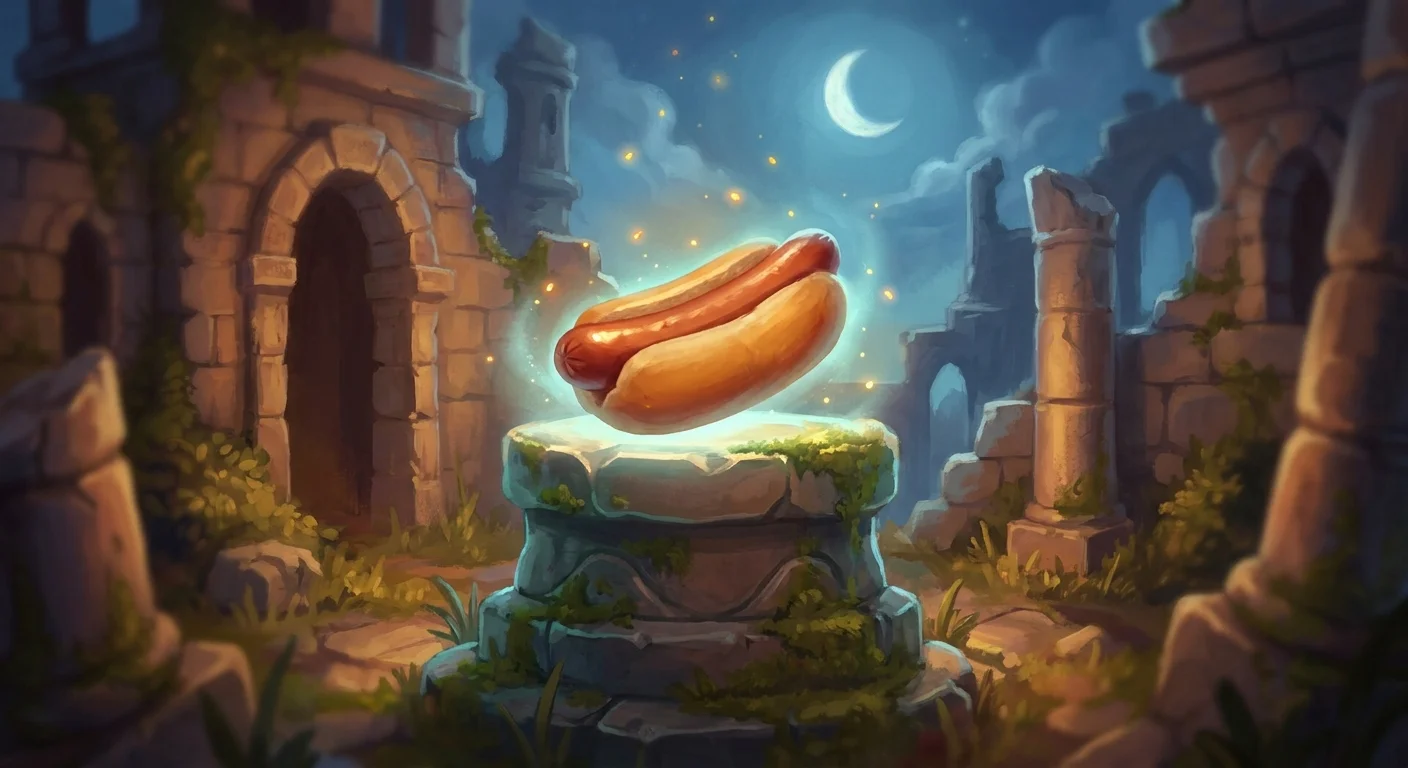
Then I did something I did not expect to do. I picked up the trampled wreath with my hotdog hands and offered it to the wolf. The glow in its eyes dimmed, and it said, quietly, "Such things were given once, in better seasons." It sat down, less a monster now and more a grieving thing.
Naturally, I tried to defeat it in single combat anyway, in my hotdog form. The wolf sidestepped in a blur of cold light and batted me into the grass with a paw that passed half through me. "Not all battles are fought with teeth and claws," it said, with real sorrow, and it still would not attack me.
And here is the thing that surprised me. When I finally asked the wolf what it guarded and why, it answered me straight, hotdog and all. "Greyholm stands on memory and blood, and I guard a promise to the true heir."
I had spent ten minutes being a sausage, and the actual story was still there, patient and intact, waiting for me to come back to it. That is the magic of the whole thing.
Why messing with the Game Master is so funny
The comedy here is not canned jokes. It is improv. You do the most ridiculous thing you can think of, and a perfectly straight narrator takes it seriously and tries to fold it back into the story.
That gap between your nonsense and its sincerity is where all the laughs live. A ghost wolf calmly asking a hotdog "is this your true shape" is funnier than any punchline I could write, because the Game Master delivered it completely deadpan. It is the oldest comedy engine there is: a straight man and a fool.
The best part is that the Game Master keeps trying to steer you back to the real quest. Watching it gently herd a confused player away from the bit and toward the plot is its own kind of entertainment. You are not breaking the game, you are playing a second, secret game on top of it.
Think of it as the Jackbox of RPGs
If you have ever passed a phone around the room playing Jackbox, you already understand the appeal. The funniest moments come from the people, not the prompts. The game just hands everyone a stage and gets out of the way.
A tabletop adventure works the same way, with a bigger stage. There is no list of three safe options to pick from. You can attempt anything you can describe, which means the room writes its own comedy in real time and a tireless storyteller plays every other part.
That is the pitch in one line: all the wild, social, anything-goes energy of a party game, wrapped around an actual story you care about. No rulebook to read, no human stuck running the night, just an easy rpg you can start in about a minute.
It is even funnier with friends
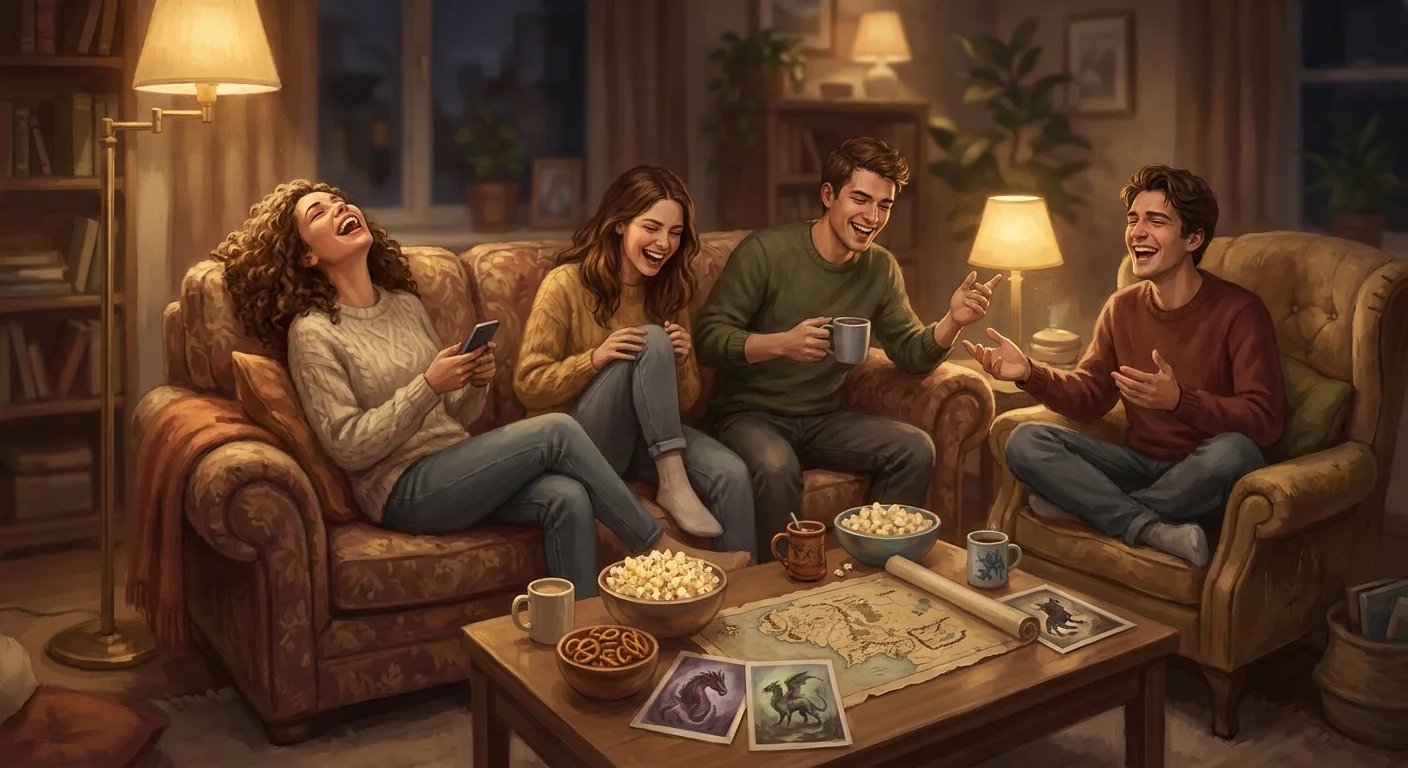
Playing alone is a great laugh. Playing with friends is where it becomes a story people retell for years. One person sends a room code, everyone joins, and now the absurdity compounds.
Someone tries to seduce the dragon while someone else swears the haunted painting is their long-lost uncle. A third person quietly tries to keep the quest on track and slowly loses their mind. The Game Master takes all of it seriously, weaves it together, and the table cannot breathe.
This is also the lowest-stakes way I know to actually hang out. Nobody has to host, clean, learn rules, or commit to a four-hour block. You just grab your friends and start an adventure, and the structure carries the night so the people can just be funny.
If you want more of these, I keep a running list of game night ideas built for exactly this kind of evening.
New adventures, straight to your inbox
Get the StartRPG newsletter for fresh one-shots, game night ideas, and tips for hosting a table with friends.
We respect your privacy. Unsubscribe at any time.
Goofing off is secretly good for you
I am not going to oversell this, but there is a real upside hiding under the silliness. The entire game is reading and writing a story. You read what the Game Master describes, then you respond in your own words, over and over.
That is good practice, the quiet kind you do not notice because you are having fun. Tabletop role playing has a long track record as a tool for building reading and language skills, and a text-first adventure leans all the way into that. You get better at reading closely and saying what you mean, while you think you are just bullying a ghost wolf.
And the social part is real too. In a world where hanging out often means staring at separate screens, this is a shared thing with a low cost of entry. It gives a group something to do together that is not just scrolling, and it is FREELY ridiculous on purpose.
You can also play it completely straight
None of this means you have to be a goofball. If you came for the classic experience, a tense co-op fantasy adventure with stakes and a real plot, that is fully here too. Play the wolf of Greyholm as the tragic mystery it was written to be, and you get a genuinely moving little quest.
Serious players are well served. The story holds together, the choices matter, and you can chase the true heir of Greyholm to the end without ever once becoming a cured meat. If you want a straight, classic-feeling session, my guide to how to play a tabletop RPG with no rulebook walks through it.
Here is my honest advice even for the serious crowd. Throw in an absurdity round now and then. A little chaos resets the table, breaks the tension, and almost always uncovers a moment your "proper" plan never would have, the same way a great Critical Role session swings between heartbreak and helpless laughter.
How to start your own funny tabletop RPG
The fastest way to get this is to do it, not read about it. The setup is short on purpose.
Set the mood, not the plot
You do not write the quest yourself, and that is part of the fun. You pick a vibe, a lighthearted romp or something dark and eerie, and a danger level, then the Game Master surprises you with a fresh story to walk into.
Make a character in a minute
Pick a class and a name and you are done. There are no stats to balance, because the story does not run on a spreadsheet, so you are free to play it as straight or as silly as you like.
Try the dumbest thing first
When the Game Master sets the scene and asks what you do, resist the obvious answer once. Do the weird thing, watch the world react, and the night tends to write itself from there.
Frequently asked questions
Is a tabletop RPG actually fun to play alone?
Yes, often more than people expect. A storyteller runs the whole world while you play your character, so a solo session is a full adventure with the spotlight always on you. You can read more in my guide to playing a solo tabletop RPG.
What happens if I do something ridiculous on purpose?
The Game Master takes it seriously and works it into the story, then gently steers you back toward the quest. That gap between your nonsense and its sincerity is exactly what makes a funny tabletop RPG funny.
Can I play it as a serious adventure instead?
Absolutely. The stories are written with real stakes and a real plot, so you can play a tense, classic co-op session start to finish. The comedy is optional, never required.
Do I need to know any rules first?
No. There is no rulebook to read and no math to learn, you just describe what your character does in plain words. The Game Master handles the rest.
Is it really better with friends?
It is a different kind of great. Solo play is a relaxed personal story, while a group turns every absurd choice into a shared bit nobody planned. One person starts a game and friends join with a room code.
Start an adventure tonight
Pick a vibe, make a character in a minute, and find out what your Game Master does when you refuse to behave. Solo or with friends, no rulebook, free to play.