How to Play D&D Online With No Rulebook
Want to play D&D online without reading a 300-page rulebook or finding a Dungeon Master? Here is how to start a full adventure with friends in about a minute.
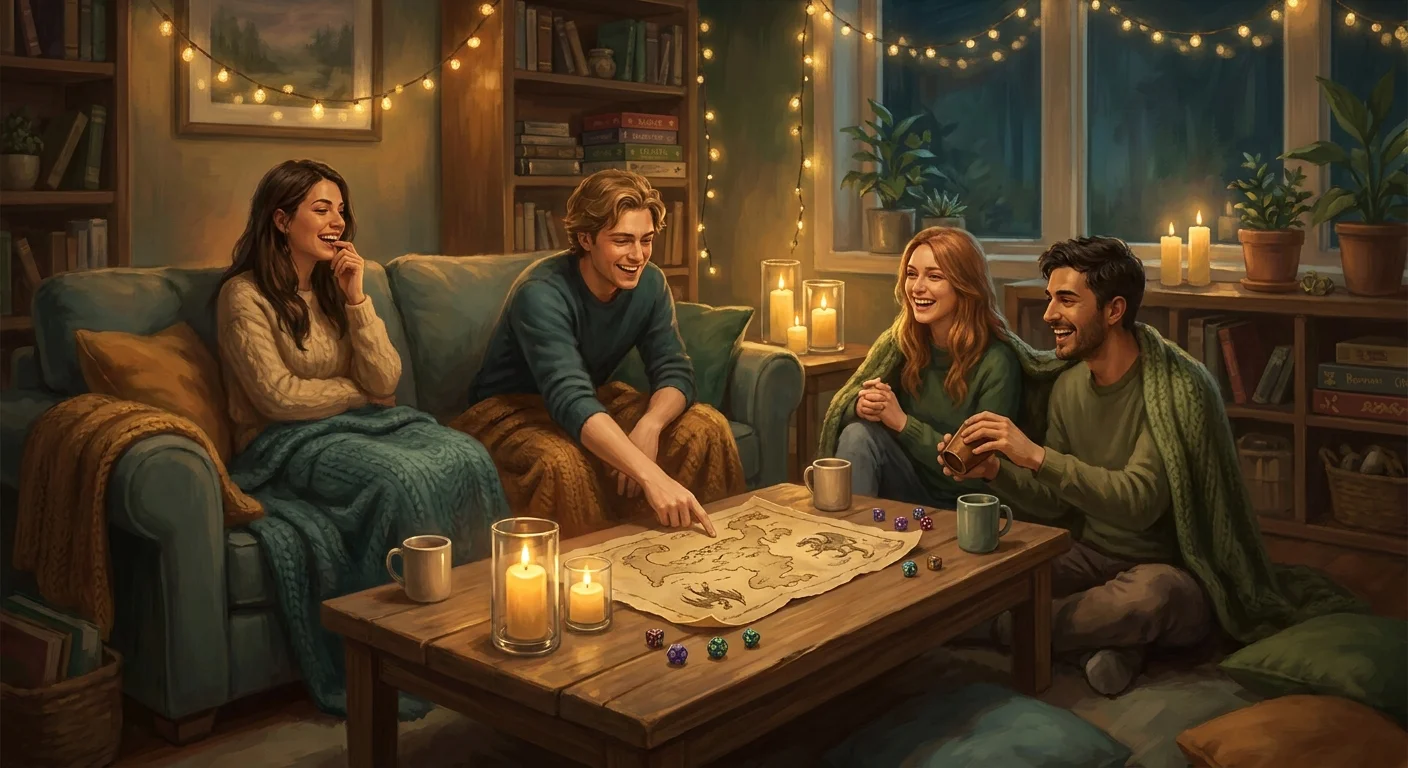
Almost everyone who wants to play D&D gets stuck at the same wall. You have to learn the rules, you have to roll up a character, and somebody has to volunteer to be the Dungeon Master and run the whole thing. It is a lot of homework for what is supposed to be a fun night with friends.
Here is the good news. You can play D&D online right now, tonight, without reading a single page of any rulebook. No character math, no four-hour prep, no friend stuck running the game while everyone else has fun. This guide walks you through exactly how that works.
The biggest myth: you need to learn the rules first
The classic version of the game leans on a thick rulebook for a reason. A human Dungeon Master needs a shared system to adjudicate what happens when you swing a sword or pick a lock. The rules are the referee.
But the rules were never the point. The point is the story: the goblin who offers you a suspiciously warm pie, the locked door with three bad options, the moment your friend tries something so dumb it actually works. The official rulebook is just the scaffolding that lets a group improvise that story together.
When a tireless Game Master runs the night instead of a person flipping through a manual, the scaffolding disappears. You describe what you want to do in plain English, and the story reacts. That is the whole shift. To go deeper on why beginners do not need to memorize anything, the lovely folks at the official free basic rules show just how much there normally is to absorb, which is exactly the part you get to skip.
What you actually need to play D&D online
Less than you think. Here is the honest list.
- A browser. Phone, laptop, tablet, whatever is in your hand. The whole adventure runs in a web page.
- One person to start the game. That is the host. Hosting takes about ten seconds and no special skill.
- Friends, if you want them. They join with a room code. You can also play on your own.
- An imagination. Genuinely the only hard requirement.
Notice what is not on the list: dice you have to buy, a character sheet, a rulebook, or a friend willing to spend their weekend prepping a dungeon. The friction that keeps most people from ever trying is gone.
How to start your first adventure, step by step
Here is what a first session actually looks like, start to finish. It moves fast, which is the point.
Step 1: Start a game
One person opens the site and starts a game. Pick a quest that sounds fun: a haunted keep, a missing caravan, a dragon nobody has seen in years. You are not committing to a campaign. This is a one-shot, a single self-contained story you can finish in a sitting.
If you want to skip the reading and just see it, this is the moment to start a fantasy adventure with friends and follow along.
Step 2: Send your friends a room code
The host gets a short room code, the same idea as a party game where everyone joins from their own phone. Drop the code in your group chat. Friends tap in from wherever they are, on whatever device they have. Nobody downloads anything.
This is the part that makes it feel like a real game night instead of a chore. There is no scheduling a four-hour block weeks in advance. You can spin up a table on a Tuesday because someone is bored.
Step 3: Make a character in about a minute
Forget the spreadsheet. You pick a vibe: a sneaky rogue, a brash fighter, a curious wizard who is probably going to set something on fire. Give them a name and maybe one detail you find funny. Done.
There is no stat math to balance and nothing to optimize. The character is a costume you put on to play, not a tax return you file. If you have ever picked a character in a video game, you already know how to do this.
Step 4: Let the Game Master set the scene
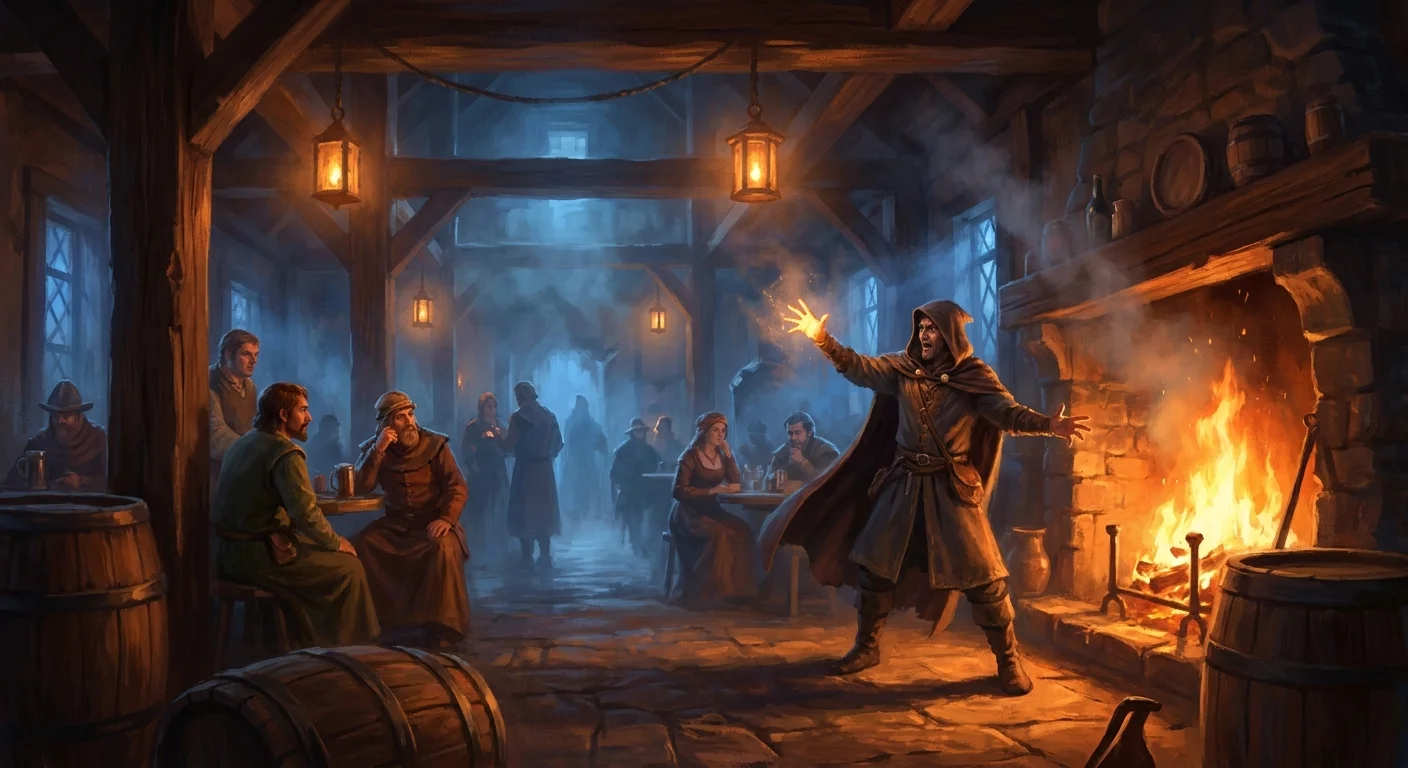
Now the story begins. Your Game Master describes where you are: the smell of the tavern, the stranger in the corner, the road that forks into a dark wood. Then it asks the only question that matters, which is what do you do.
You answer in plain words. Talk to the stranger. Search the room. Climb the wall. The narrator takes whatever you try and weaves it into what happens next. It never gets tired, never cancels, and never makes anyone sit out so they can run the game.
What a session actually feels like
The closest comparison is the feeling of a great group text where everyone is riffing, except there is a story underneath holding it together. Someone makes a wild choice, the table laughs, and the world bends to include it.
Be honest with yourself about what this is and is not. It is a loose, story-first adventure you steer with your choices. It is not a strict rules simulator that tracks every inch of movement on a grid. If you want the crunchy math of the tabletop hobby, that experience still exists and it is wonderful. This is the version for the night you just want to play.
That looseness is a feature. Because nothing is enforcing a rigid rulebook, you can try the ridiculous plan, the clever plan, or the plan that is just bribing the guard with that suspiciously warm pie. The world reacts to your imagination, not to a chart.
Nobody has to be the Dungeon Master
This is the quiet reason so many groups never get a game off the ground. Everyone wants to play. Almost nobody wants to do the prep, learn the monster stats, and shoulder the job of running it for everyone else.
When the Game Master runs itself, that whole problem evaporates. Your most enthusiastic friend gets to actually adventure instead of refereeing. Everyone is a player. Everyone is in the story together.
If your group has been circling the idea of a game night for months and nobody has volunteered to host the old-fashioned way, this is your shortcut. Send a code and play tonight, no homework assigned to anyone. New to the whole hobby? My guide to the easiest RPG for total beginners walks through your very first session step by step.
New adventures, straight to your inbox
Get the StartRPG newsletter for fresh one-shots, game night ideas, and tips for hosting a table with friends.
We respect your privacy. Unsubscribe at any time.
Five tips for a great first session
After watching a lot of first-timers jump in, these are the things that make a debut session sing.
- Say yes to bits. If a friend leans into a funny accent or a dumb plan, roll with it. The best moments come from the table building on each other.
- Be specific. Do not say you search the room, say you check under the loose floorboard. The more vivid your action, the better the story you get back.
- Keep the first quest short. A one-shot you can wrap in a sitting beats an epic you never finish. You can always start another.
- Let everyone have a moment. Pass the spotlight around so the quiet friend gets their hero beat too.
- Do not overthink your character. A name and one trait is plenty. The character grows through play, not through planning.
If you want a deeper sense of why a single shared story keeps a group glued for hours, the cultural reach of the hobby is real. Shows like Stranger Things and the runaway success of Critical Role pulled millions of people toward the table. Most of them just never found an easy on-ramp. You are looking at it.
Is it really free to play?
Yes. You can start an adventure and play with your friends without paying anything. The host can chip in later if they want to support the project, but friends always play free. Cost is not a barrier here, and neither is gear.
Compare that to the traditional path: rulebooks, dice sets, maybe a battle mat and miniatures. None of that is required to play a great D&D-style adventure online. You bring the people and the imagination; everything else is handled.
The bottom line
Playing D&D online with no rulebook is not a watered-down version of the hobby. It is the part of the hobby everyone actually came for: the shared story, the laughs, the wild choices, minus the homework that scares people off.
You do not need to be a D&D person to have a great fantasy adventure tonight. You just need a browser and a few friends. When you are ready, grab your party and try an easy tabletop rpg with no rulebook, no prep, and no one stuck running the game.
Frequently asked questions
Do I need to know any D&D rules to play online?
No. You describe what your character does in plain English and the Game Master handles the rest. There is no rulebook to read and no stats to track, so a complete beginner can jump straight into the story.
Do I need a Dungeon Master or a group?
Neither is required. A tireless Game Master runs the whole adventure, so nobody at your table has to host or prep. You can play with friends using a room code, or play solo if you prefer a party of one.
How long does a session take?
A one-shot is built to finish in a single sitting, often well under the four hours a traditional session can run. You start a game, play through a self-contained quest, and reach an ending the same night.
What do my friends need to join?
Just a browser and the room code you send them. They join from any phone, laptop, or tablet with nothing to install, which makes a spontaneous game night easy to pull off.
Is this the same as official Dungeons & Dragons?
No. StartRPG is an easy way to play a D&D-style fantasy adventure online, not an official or licensed product. Think of it as the lowest-friction way to get the game-night feeling without the rulebook.
Ready to roll?
Pick a quest, send your friends a room code, and let a tireless Game Master run the whole night. No rulebook, no prep, free to play.