Getting Into D&D in 2026: The Honest On-Ramp
Curious about getting into Dungeons & Dragons after Stranger Things, Baldur's Gate 3, or Critical Role? The hard part is no longer learning the game. Here is how to actually start.
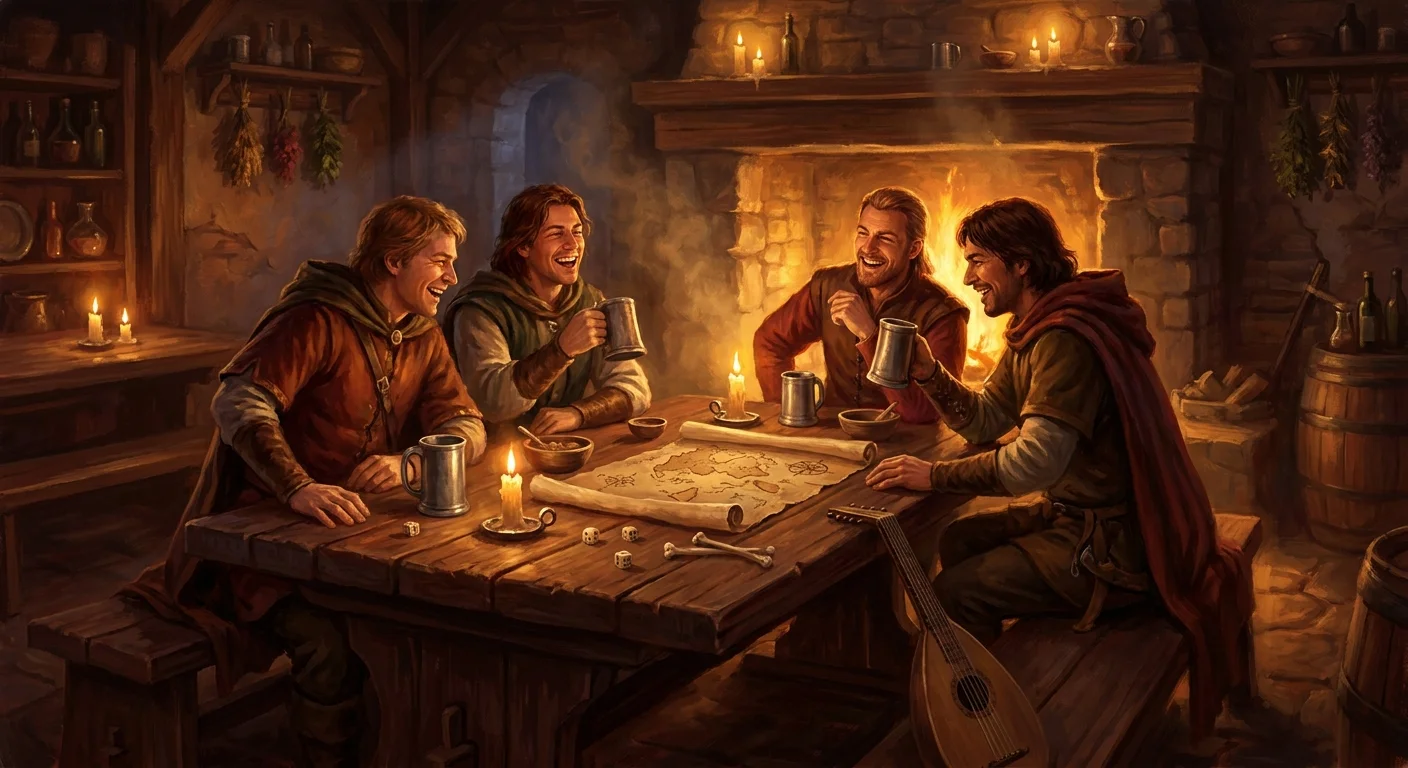
I was in Nashville recently and every band on Broadway was playing "Purple Rain." Not because Prince had just died, but because Stranger Things had put the song back in front of a generation that barely knew it existed. The same engine that sent a 1985 Kate Bush track back to the top of the charts has spent the last few years pulling an enormous new wave of people toward Dungeons & Dragons.
Eddie Munson shredding on the roof of the Upside Down, the Hellfire Club, Baldur's Gate 3 selling millions of copies, Critical Role filling theaters. The cultural gravity is undeniable, and a lot of curious people now want in. The good news is that getting into Dungeons & Dragons in 2026 is dramatically easier than it was a decade ago.
The hard part has moved.
This is the honest map. It covers what has actually changed, where people still get stuck, and the realistic on-ramp that gets you playing a real adventure tonight instead of reading about one for a month.
The Stranger Things effect is real
When Season 4 dropped in 2022, Eddie Munson and the Hellfire Club did for tabletop roleplaying what the show did for Kate Bush's "Running Up That Hill", which went to number one in the UK and hit number three on the US Billboard Hot 100 nearly four decades after its release. A piece of culture from the 1980s suddenly belonged to kids who were not born when it was made.
The same thing happened to the hobby around that table. The show depicted D&D as the thing that gave a group of small town kids a shared language, a place to belong, and a way to make sense of a world that was stranger than they could handle alone. That portrayal landed.
Sales of the tabletop game had already been climbing for seven straight years, and the 2024 Player's Handbook became the fastest-selling book in the game's 50-year history.
Add in Baldur's Gate 3, the blockbuster video game that let millions of people play a faithful D&D story on their own terms, and Critical Role, the weekly show that turned a home game into a global phenomenon. The audience that "wants to try this" has never been bigger.
What has actually changed about getting in
A decade ago, the barrier to entry was the rules. You bought three hardcover books totaling around 900 pages, found a friend willing to study them well enough to run the game, and carved out a four hour block every week. A lot of curious people bounced off that wall, and rightfully so.
Today the rules barrier is mostly solved. The basic rules are free online, beginner friendly starter sets exist, and there are formats that handle the rules for you entirely. The hobby has met the audience halfway on the part that used to scare everyone off.
What has NOT been solved by a rulebook is the human logistics. And that, quietly, is where most people who "want to get into D&D" still stall out.
The real bottleneck is finding a table
Ask anyone who has wanted to play for years but never has, and you rarely hear "the rules were too hard." You hear some version of the same three problems.
- Nobody wants to be the Dungeon Master. One person has to run the whole world, prep the story, and play every monster. That job is a labor of love, and most groups do not have a volunteer.
- Scheduling is a nightmare. Four busy adults, a four hour block, every week. Coordinating that is harder than the game itself.
- There is no table to join. Local game stores have limited slots, online forums are intimidating for a first timer, and most existing groups are closed.
The traditional answer is to form your own group and convince one of your friends to do the prep. That works, eventually, for the people who push through. For everyone else, the interest just sits there, unused.
The modern on-ramp
The way around the bottleneck is to remove the job nobody wants. When a tireless Game Master runs the entire story, nobody at your table has to prep, nobody has to referee, and nobody is stuck being the one who makes the night happen. Everyone gets to be a player.
That single change collapses the logistics problem. You do not need to find a DM, because the DM runs itself. You do not need to schedule a marathon, because a one-shot you finish in one sitting is the whole point.
And you do not need to join a stranger's table, because your table is your friends and a room code.
If that sounds like the version you have been looking for, you can start a fantasy adventure with friends in about a minute, no rulebook required. This is the path for the person who has been curious for years and finally wants to just play.
What your first session actually looks like
Forget the epic campaign. Your first session should be a one-shot, a single self-contained story that begins and ends in one sitting. A haunted lighthouse, a stolen crown, a village with a dragon problem.
Small stakes, complete arc, done tonight.
You pick a character by giving them a vibe and a name. A reckless knight, a sly trickster, a kind healer with a short temper. One detail that makes you smile, and you are ready.
There is no spreadsheet, no character sheet math, nothing to balance.
Then the Game Master opens the scene. The smell of the tavern, the stranger in the corner, the fork in a dark road. The only question that matters is what do you do.
You answer in plain words, the world responds, and a story takes shape that nobody scripted. That loop is the entire hobby, and it is genuinely as fun as it looks on the shows that got you curious.
New adventures, straight to your inbox
Get the StartRPG newsletter for fresh one-shots, game night ideas, and tips for hosting a table with friends.
We respect your privacy. Unsubscribe at any time.
Do not fall for these on-ramp myths
A few persistent myths keep curious people on the sidelines. None of them are true anymore.
- "I have to read the rulebook first." You do not. An easy on-ramp handles the rules behind the scenes so you can learn by playing. If you want the crunchy version later, it is still there, but it is not the gate.
- "I need a dedicated group of four to six people." You can play with one friend, or solo, or with a full table. The format flexes to the people you actually have.
- "It takes months to get good." Your first night is supposed to be a little chaotic and a lot of fun. Competence comes from playing, not from studying first.
- "I am not nerdy enough." The audience that showed up because of a hit TV show is the audience now. You belong here.
What to actually do tonight
If you have read this far, you are closer than you think. The fastest way to turn years of curiosity into an actual first adventure is to skip the prep and just play one. Pick a quest, make a character, and let a storyteller who never gets tired run the rest.
Friends join with a room code from any device, nobody is stuck being the Dungeon Master, and the whole thing is free to play. When you are ready, grab your friends and start an adventure tonight.
Once you have a session under your belt, two companion guides go deeper. If you want to understand the actual rules that matter rather than skip them entirely, my breakdown of D&D rules for beginners explains the handful of mechanics behind the curtain. And if you want a clear timeline for getting from "curious" to "playing tonight," my guide on how to start playing D&D walks the path step by step.
The bottom line
Getting into Dungeons & Dragons used to mean surviving a wall of rules and a wall of logistics. The rules wall is down. The logistics wall is the one a modern on-ramp takes out, by running the game for you so you can just play it with your friends.
The cultural door is wide open. The hobby has never been more welcoming, and the version that fits your actual life is right here, an easy rpg with no rulebook, no prep, and no one stuck running the game.
Frequently asked questions
Is it hard to get into Dungeons & Dragons in 2026?
Learning the game is easier than ever thanks to free basic rules and beginner friendly formats. The remaining hurdle is logistical, finding a group and a Dungeon Master, which a format that runs the story for you removes entirely. You can be playing your first session the same night you decide to start.
Do I need to watch Critical Role or play Baldur's Gate 3 first?
No. Those are great entry points that got a huge new audience curious, but they are not prerequisites. You can show up to your first session knowing nothing except that you want to try a fantasy adventure with friends.
What if I do not have a group or a Dungeon Master?
That is the most common blocker, and it is exactly what a tireless Game Master solves. The story runs itself, so nobody at your table has to host or prep. You can play solo, with one friend, or invite a whole group with a room code.
How long does it take to get into D&D?
Minutes, not months. A one-shot you finish in one sitting is the natural first step, and it teaches you more about the game than any amount of reading. You start playing, and the hobby teaches itself from there.
Is StartRPG the same as official Dungeons & Dragons?
No, it is a separate, easy way to play a D&D style adventure. It is not affiliated with or endorsed by Wizards of the Coast. It uses the same spirit of collaborative storytelling, without the rulebook and prep that make the traditional version hard to start.
Start your first adventure tonight
The cultural door is open. Pick a quest, make a character in a minute, and let a tireless Game Master run the rest. No rulebook, no prep, free to play.